
BENTWOOD CHAIR

CH01A-P

——

DESIGN

Unknown , 17th-century

The Windsor chair dates back to late 17th-century England, where it was originally crafted by rural artisans as a practical seat for farmers and laborers; it takes its name from the Windsor region of England, where it was mass-produced. In the 18th century, American colonists introduced the chair to North America, where it quickly gained popularity during the colonial era, becoming an iconic piece of furniture in early American rural life. As a representative of early American furniture design, it bears witness to the lifestyle of the colonial period and is regarded as a core symbol of the “American Country style,” even appearing in important buildings such as the White House.

Translated with DeepL.com (free version)

TECHNICAL DATA

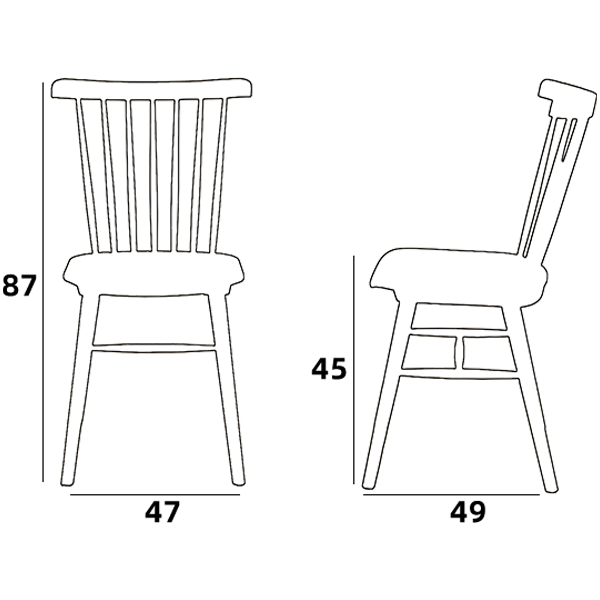
Height: 87 cm

Width: 47 cm

Depth: 49 cm

Seat height: 45 cm

Stackable: yes

Material: beech

Weight: 8 kg
LEARN MORE

Functionality First

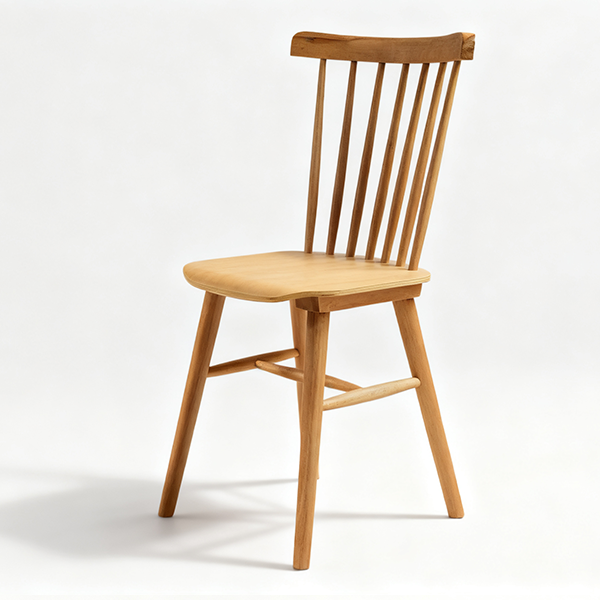
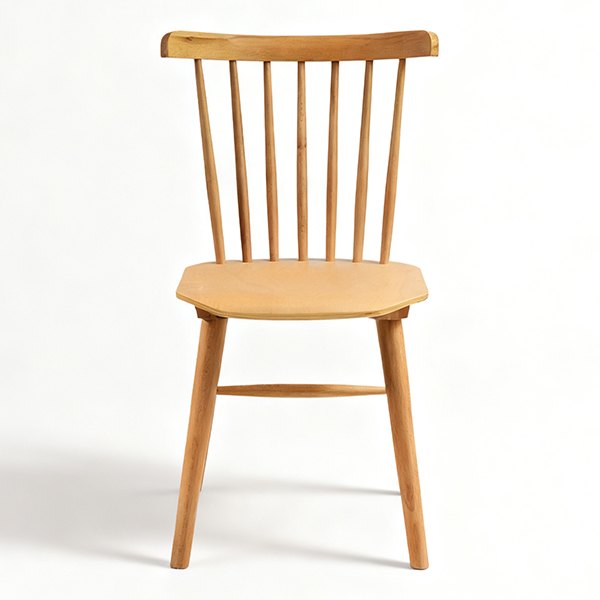
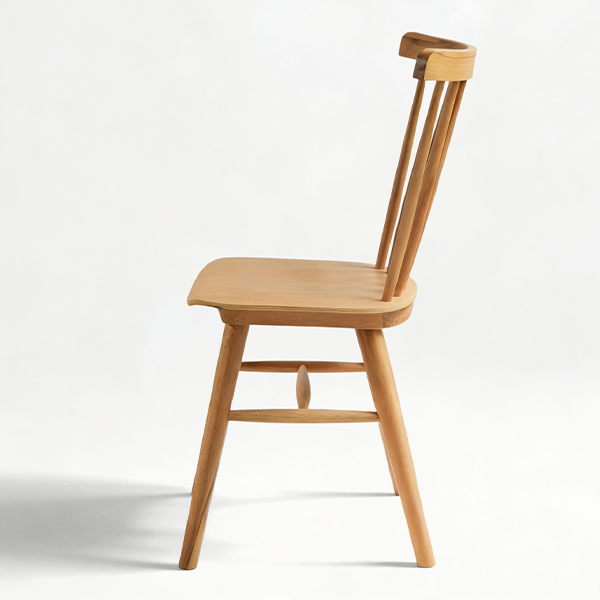
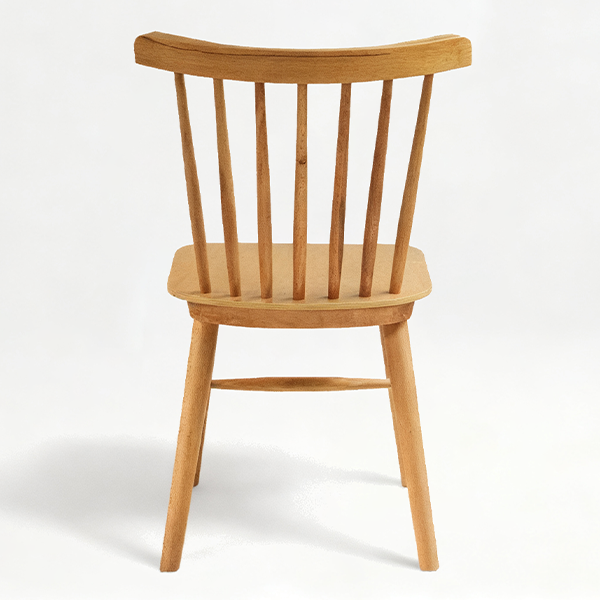
The core design philosophy is “practicality above all.” The vertical slatted backrest (arrow-back) provides lumbar support while reducing the chair’s weight and ensuring breathability, making it suitable for extended periods of sitting.

Four outward-flaring tapered legs combined with a horizontal crossbar form a sturdy trapezoidal structure that effectively distributes body weight, prevents wobbling, and adapts to the uneven surfaces typical of rural environments.

Eschewing unnecessary ornamentation, the chair showcases natural, rustic beauty through its raw wood texture and fluid lines, embodying the “less is more” design philosophy and aligning closely with later modernist and Scandinavian design principles.

Originally designed for outdoor and rural work settings, it gradually found its way into home dining rooms and studies, becoming a versatile chair that combines practicality with aesthetic value.

Steam-bent solid wood (primarily beech). High-temperature steam softens the wood, allowing it to be shaped using molds; after drying, the chair retains its stable curvature.

Turning: The backrest slats (spokes) and chair legs are all turned to form a uniform taper or cylindrical shape, a classic application of traditional woodworking techniques. Mortise and Tenon Joints: The backrest slats are inserted into the seat and top rail, while the chair legs are connected to the seat via mortise and tenon joints. Cross braces provide additional reinforcement, ensuring structural durability. Hand-Sanding: Traditional Windsor chairs are typically handcrafted, with surfaces sanded to a smooth finish that preserves the wood’s natural grain.

Traditional Style: Primarily uses hardwoods such as oak, ash, and elm, which are hard, have distinct grain patterns, and offer excellent resistance to bending. Modern Styles: Beech, rubberwood, and ash are also commonly used, balancing cost and texture. The image shows a light-colored ash/beech version.

Traditional styles are typically finished with clear varnish or wood wax oil to preserve the natural wood color; modern styles also come in white, gray, and other finishes to complement Scandinavian, Japanese, and other design styles.