
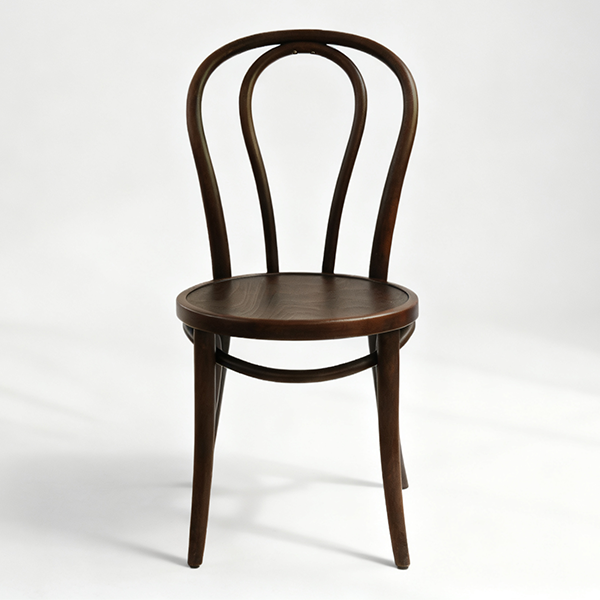
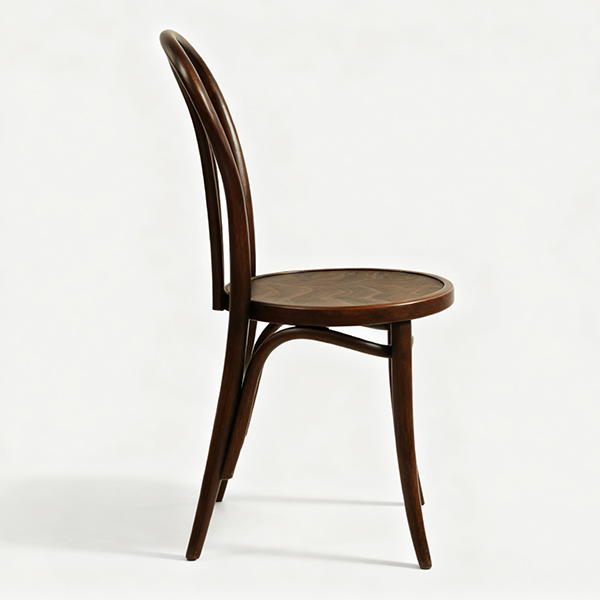
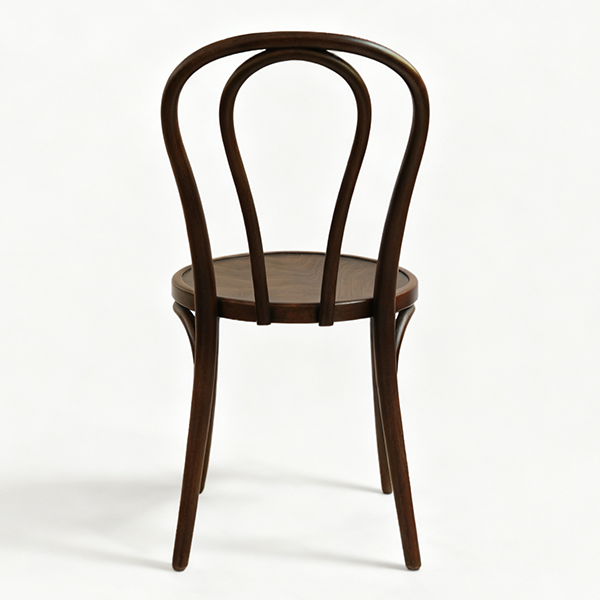
BENTWOOD CHAIR

CH18A-P

——

DESIGN

Michael Thonet , 1859

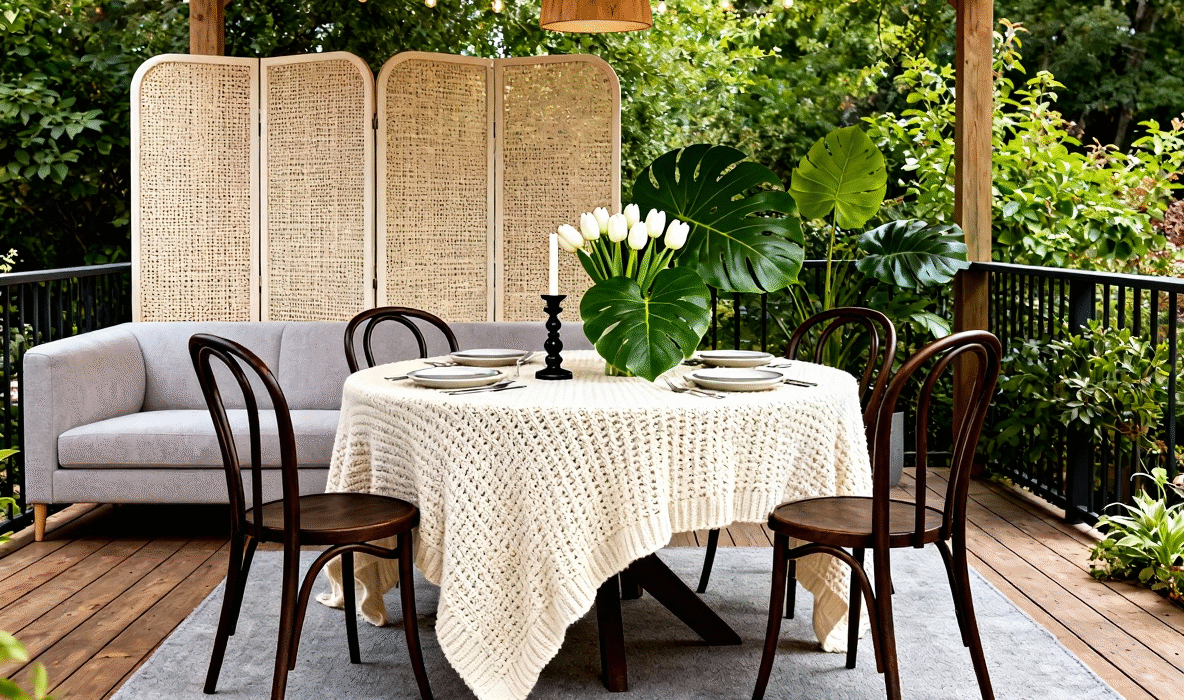
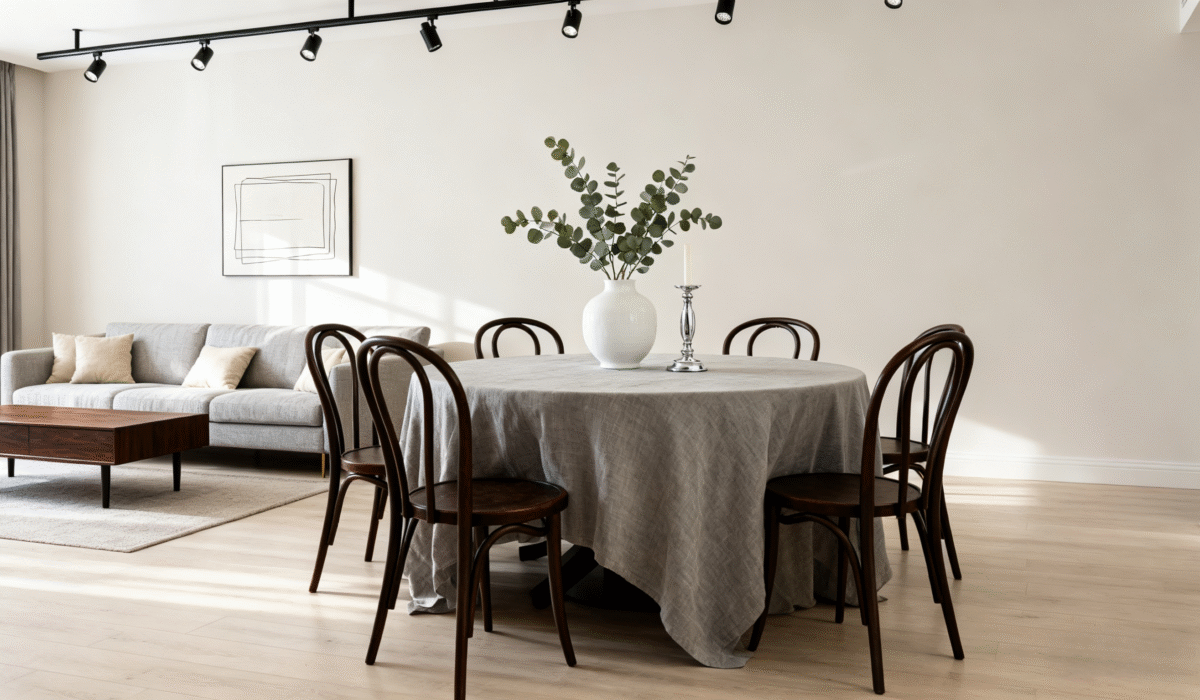
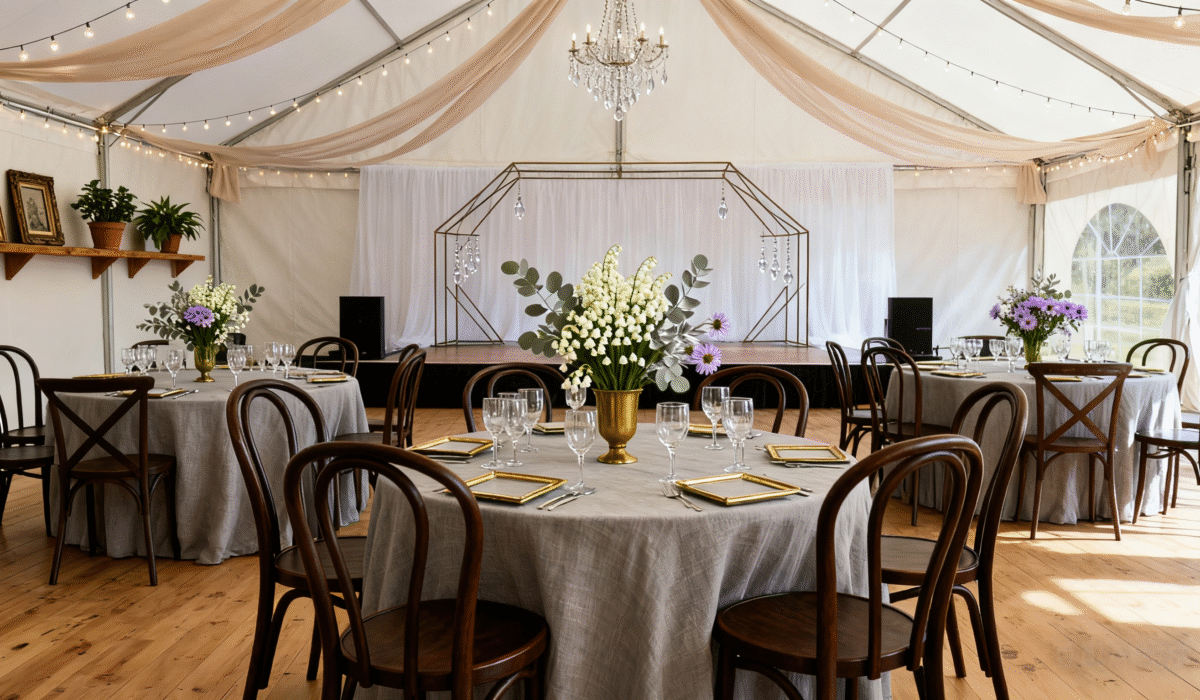
In 1859, it was designed by German carpenter Michael Thonet. After nearly 20 years of research and development, Thonet perfected a technique for steam-bending solid wood, softening beech wood and shaping it into smooth curves, thereby achieving a harmonious blend of elegant design and industrial mass production. Between 1859 and 1930, global sales exceeded 50 million units, making it the world’s first chair to achieve true large-scale industrial production. A pioneer of modern industrial design, it directly influenced modern design movements such as the Bauhaus school and laid the groundwork for the mass production of subsequent steel-tube and plastic chairs. Still produced and reissued worldwide today, it is widely used in homes, cafés, and restaurants, standing as a timeless design icon that transcends eras.

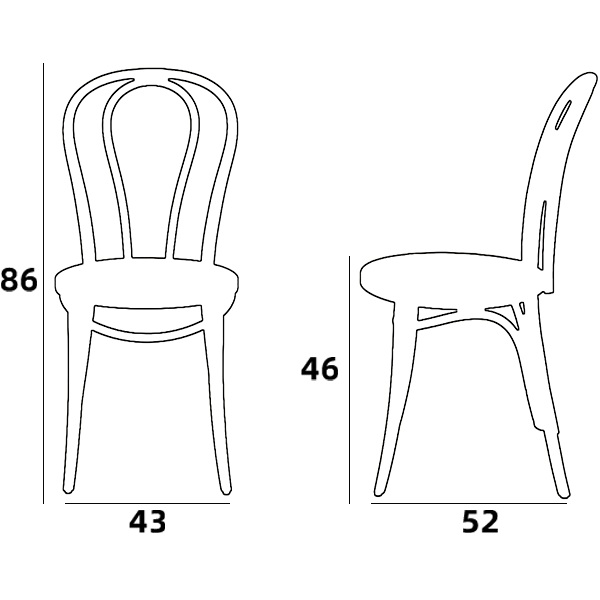
TECHNICAL DATA

Height: 86 cm

Width: 43 cm

Depth: 52 cm

Seat height: 46 cm

Stackable: yes

Material: walnut

Weight: 8 kg
LEARN MORE

Minimalist Structure

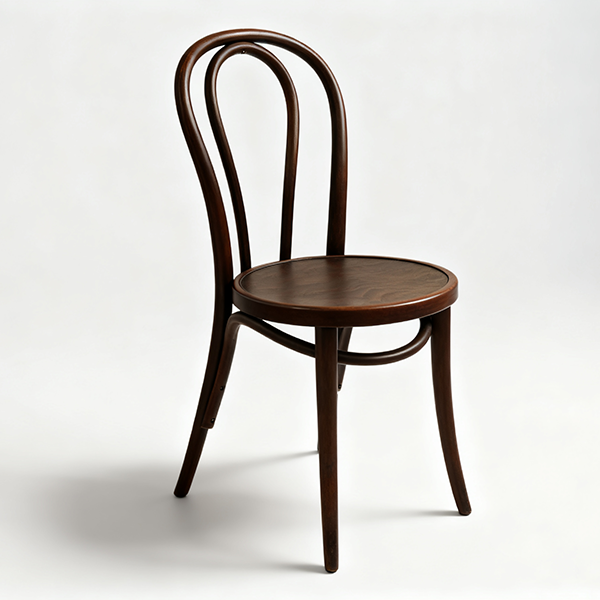
The entire chair consists of just six bentwood components, ten screws, and two washers—free of unnecessary embellishments, with a clear and efficient structure.

The fluid curves are both ergonomic and designed to maximize material strength, balancing comfort with stability.

The chair can be disassembled into flat-pack components; a single cubic box can hold 36 units, significantly reducing shipping costs and making this classic design accessible to households and cafés alike.

The elegant double-loop backrest has become an iconic symbol, blending classical and modern elements, and is still regarded today as “the chair of chairs.”

Steam-bent solid wood (primarily beech). High-temperature steam softens the wood, allowing it to be shaped using molds; after drying, the chair retains its stable curvature.

Original versions typically feature rattan seats (breathable and lightweight), though solid wood seat versions are also available (as shown in the image), catering to different usage scenarios.

The solid wood frame and simple joinery ensure the chair can withstand long-term use; many original 19th-century chairs are still in use today.